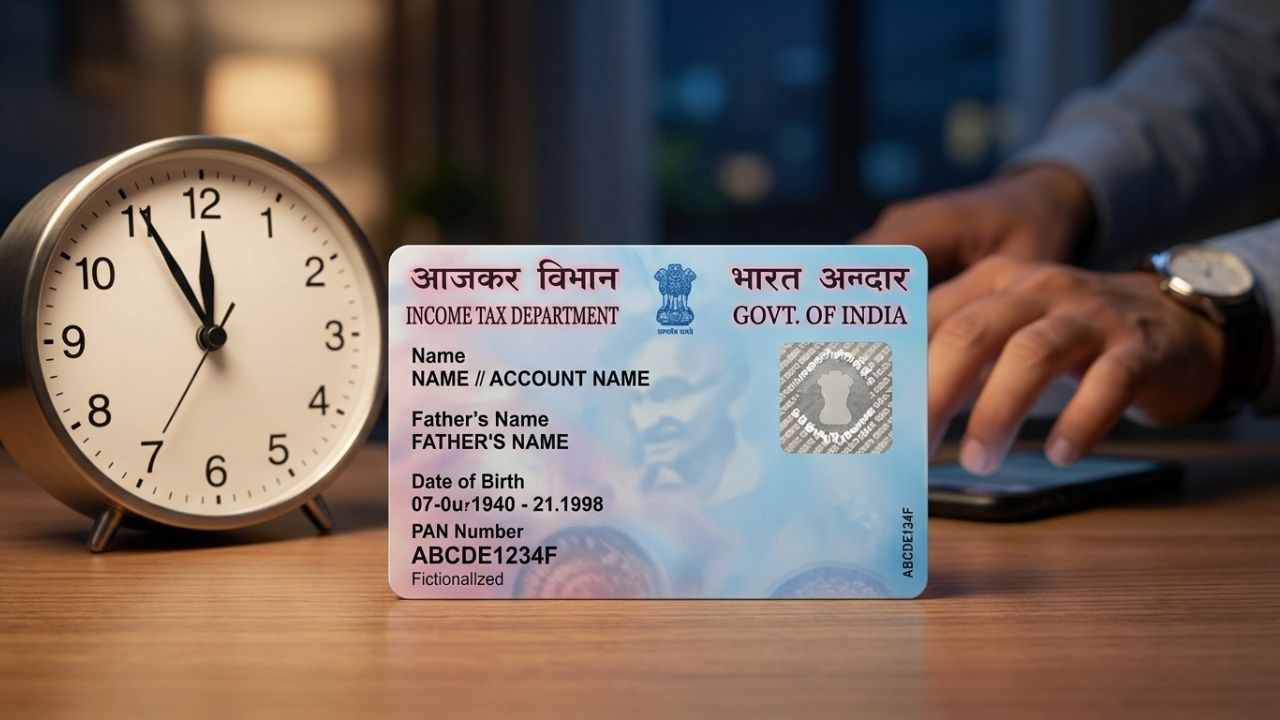
PAN Card Rule Change: Why Your PAN May Stop Working Tonight
Last Updated: April 16, 2026, 8:50 PM IST. A massive wave of “PAN Inoperative” alerts is hitting taxpayers across India tonight. Following the implementation of the Income Tax Rules, 2026, the Central Board of Direct Taxes (CBDT) has begun deactivating PAN cards that were previously issued using only an Aadhaar Enrolment ID without a secondary verified birth proof.
If your PAN becomes inoperative tonight, you will face immediate disruptions in your financial life. You will not be able to file Income Tax Returns (ITR), receive pending tax refunds, or conduct high-value transactions.
Most importantly, your bank will now deduct TDS (Tax Deducted at Source) at a much higher rate of 20% on your interest income. This is especially critical for those already struggling with salary and EMI delays or those trying to liquidate assets to cover the surging gold prices.
The New Birth Proof Mandate for 2026
The core of the “April 16 Crisis” lies in a technical shift in how the government validates identity. Under the new 2026 framework, using only Aadhaar is no longer sufficient for PAN verification in several high-risk categories.
Users are now being asked to link an additional document such as a Class 10 Certificate, Passport, or Birth Certificate to maintain their “Operative” status. This change is designed to eliminate duplicate PANs that were generated during the rapid digital push of 2024-25.
If you are a salaried employee, this deactivation could block your Form 16 issuance, which is currently being prepared for the upcoming tax season. Furthermore, the new RBI security rules for UPI mean that if your bank account KYC is linked to an inoperative PAN, your daily transaction limits may be slashed to zero without prior warning. You must check your official status on the e-filing portal immediately.
New Transaction Limits (April 2026 Update)
The 2026 rules have also revised the thresholds where quoting your PAN is mandatory. For instance, the limit for cash deposits or withdrawals has been increased to ₹10 lakh per financial year, but the scrutiny on these transactions has intensified. If your PAN is flagged as inoperative, any attempt to deposit cash above ₹50,000 tomorrow could trigger an automated “Notice of Non-Compliance.”
- Property Transactions: PAN is now mandatory for deals exceeding ₹20 lakh.
- Hotel/Travel Bills: The limit has been raised to ₹1 lakh, up from ₹50,000.
- Two-Wheelers: PAN is required for any motor vehicle purchase above ₹5 lakh, including premium motorcycles.
These limits are being strictly enforced through the new money rules that went live earlier this month. If you are caught in the current UPI refund lag, an inoperative PAN will make the manual reconciliation process with your bank significantly harder.
How to Reactivate Your PAN Tonight
If your PAN is already inoperative, the only way to restore it is by paying a ₹1,000 penalty under the “Minor Head 500” on the e-filing portal. However, be warned: tonight’s high traffic on the Income Tax e-filing site [incometax.gov.in] is causing frequent session timeouts. It is recommended to use a desktop browser and clear your cache before attempting the payment.
Once the payment is successful, it can take 3 to 5 working days for your status to reflect as “Operative.” During this period, you should avoid making high-value purchases or trying to withdraw EPFO interest funds, as these systems are now natively linked to the PAN database. For those in rural areas, the ATM cash crunch makes this even more frustrating, as you cannot rely on branch-level manual overrides while the holiday backlog persists.
Immediate Action Plan
- Check Status: Use the “Link Aadhaar Status” tool on the official portal.
- Verify DOB Proof: Ensure your Birth Certificate or Class 10 certificate matches your PAN records.
- Update KYC: Log in to your bank app and re-verify your PAN details to ensure your EMI payments don’t bounce on Friday.
- Monitor Official Alerts: Check for the latest PIB notifications regarding any potential extensions for specific categories like NRI or senior citizens.
Stay updated with our daily financial trackers to ensure you never miss a compliance deadline. With the RBI MPC meeting signals indicating stricter financial monitoring ahead, staying compliant is no longer optional.
Disclaimer: This information is based on the Income Tax Rules, 2026 and current CBDT notifications. Always consult a certified tax professional or the official Income Tax website for personalized compliance advice.