


Live Updated: April 4, 2026 • 10:10 AM IST
The start of the 2026-27 financial year has brought a renewed focus on India’s traditional artisans and the growing network of rural self-help groups. As of April 4, 2026, the PM Vishwakarma Yojana has entered its next phase of expansion, specifically integrating “Jeevika Didis” and women-led micro-enterprises into its core support structure.
This strategic shift aims to provide not just financial aid but a complete ecosystem for those working in the 18 identified traditional trades across the country.
For millions of families relying on traditional craftsmanship, this scheme serves as a bridge between age-old skills and modern market demands. The government has streamlined the registration process this month to ensure that the benefits reach the “last mile” without technical hurdles.
Understanding the new eligibility criteria and the multi-layered benefit system is essential for any artisan looking to scale their business this year.
Expanded Eligibility Criteria for 2026
The most significant update this April involves the inclusion of localized self-help group members who are engaged in traditional trades. To qualify for the PM Vishwakarma benefits in 2026, the applicant must be an artisan or craftsperson working with their hands and tools in one of the specified trades, such as carpentry, blacksmithing, pottery, or tailoring.
A key requirement for the new session is that only one member per household is eligible to receive the benefits. Furthermore, the applicant should not have availed of similar credit-based schemes like PMEGP or PM SVANidhi in the last five years.
While applying for these benefits, many households are also reviewing their overall government compliance. It is a good time to ensure your documentation is ready, especially considering the ration card new rules that mandate updated eKYC for continued food security.
The Three Pillars of Financial Support
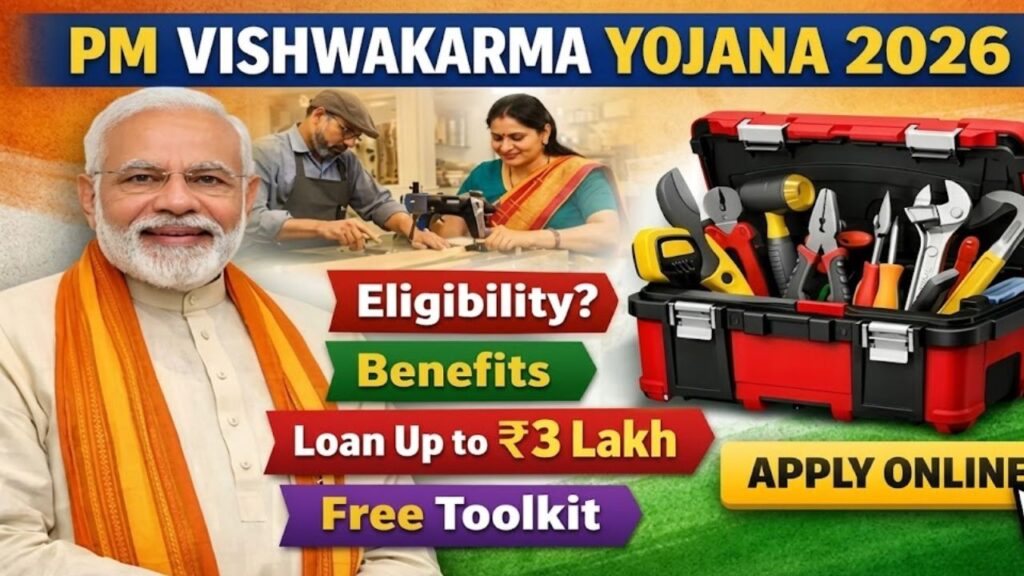
The PM Vishwakarma Yojana is structured to provide support in three distinct stages: Skill Verification, Toolkit Incentive, and Credit Support. Once an artisan is registered and their skill is verified through a basic 5-to-7-day training program, they become eligible for the first financial touchpoint the Toolkit Incentive.
In 2026, the government provides an e-voucher of ₹15,000 to every verified Vishwakarma to purchase modern tools. This is followed by the “Enterprise Development Loan,” which offers up to ₹3 Lakh in two tranches.
The first tranche of ₹1 Lakh comes with an 18-month repayment period, while the second tranche of ₹2 Lakh is available after successful repayment of the first. The interest rate is heavily subsidized, capped at just 5%, which is significantly lower than most commercial bank loans.
Skill Upgradation and Daily Stipend
Beyond the loan, the scheme focuses heavily on “Guru-Shishya Parampara” through modern training modules. Artisans undergo “Basic Training” for 5 to 7 days, and those looking for advanced expertise can opt for “Advanced Training” lasting 15 days or more. During this period, the government provides a daily stipend of ₹500 to compensate for the loss of daily wages.
This training is not just a formality; it concludes with the issuance of a PM Vishwakarma Certificate and ID Card. This identity serves as a “credit-ready” document for future banking needs. As you plan your training schedule, remember to check the bank holidays in April to ensure your stipend credits and loan processing are not delayed by regional closures.
Marketing Support and Digital Integration
A common challenge for rural artisans is finding a market for their finished goods. Under the 2026 guidelines, the Ministry of Micro, Small and Medium Enterprises (MSME) provides dedicated marketing support. This includes onboarding artisans onto e-commerce platforms, providing quality certification, and offering space in national trade fairs and exhibitions.
The scheme also encourages digital transactions by offering a small cashback for every digital sale or purchase made by the artisan. This push for digitalization aligns with broader financial trends in India. For instance, staying updated on money rules changing this month can help you understand how new UPI and banking fees might interact with your business accounts.
Integration with Other Social Security Schemes
The government is now linking PM Vishwakarma beneficiaries with other flagship welfare programs to provide a “360-degree” safety net. Verified artisans are encouraged to enroll in insurance schemes and housing programs.
If you are a registered artisan looking for permanent housing, you should frequently monitor the PM Awas list to see if your status has been updated for the 2026-27 cycle. Furthermore, for those artisans who also engage in farming or reside in rural areas, maintaining a clear record of your government identifiers is vital.
Any discrepancies in your Aadhaar or mobile linking could lead to issues, similar to how many farmers face PM Kisan payment stuck problems due to failed eKYC. Keeping your data updated ensures that the Vishwakarma benefits flow seamlessly into your bank account.
How to Apply Online in 2026
The application process is entirely digital and can be completed through the Common Service Centres (CSC). The artisan must carry their Aadhaar card, a bank passbook, and an active mobile number.
The process involves four main steps: mobile and Aadhaar authentication, artisan registration, PM Vishwakarma certificate generation, and finally, the application for scheme components like loans and toolkits.
Because this is the first week of the new financial year, there is a high volume of applications. It is advisable to visit your nearest CSC during the morning hours. While managing these applications, keep an eye on your household expenses, such as the LPG gas cylinder price, which may have changed as of April 1, affecting your overall financial planning for the month.
Conclusion and Final Steps
The PM Vishwakarma Yojana 2026 represents a massive opportunity for the backbone of India’s rural economy. By combining traditional skills with modern capital and digital tools, the scheme provides a realistic path toward “Atmanirbhar” or self-reliance. If you or someone you know belongs to the 18 identified trades, now is the time to verify eligibility and begin the registration process.
Ensuring your family’s financial health also means staying informed about other market shifts. Whether it is tracking the gold price today for future savings or understanding the new income tax act, a well-informed citizen is better prepared for the economic changes of 2026.
Editorial Note: This article provides updated information on the PM Vishwakarma Scheme as of April 4, 2026. Verify details on official portals.